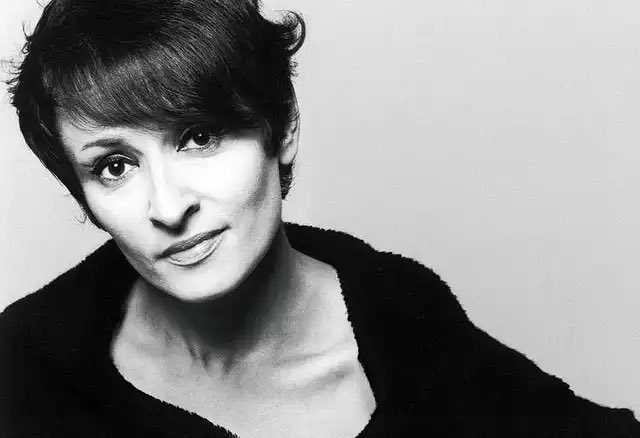
Iconic French singers are often known worldwide. Even those unfamiliar with the music will likely recognise names such as Édith Piaf, Serge Gainsbourg or Charles Aznavour.
But who has ever heard of Barbara?
In her homeland, Barbara was – and remains – a legend. During the 1960s she stood alongside Jacques Brel and Georges Brassens as one of the great pillars of chanson française. She was also among the first major female singers in France to write and perform her own material: a body of work that was deeply personal, poetic and emotionally raw. Yet her fame has rarely extended beyond French-speaking audiences.
Barbara was born in Paris in 1930 as Monique Andrée Serf. Her childhood unfolded in the shadow of the Second World War. At the age of ten she was forced into hiding: both her parents were Jewish – her father from Alsace, her mother from Moldova.
Her early life was marked by trauma. In her posthumously assembled autobiography, Il était un piano noir, Barbara recounts the sexual abuse she suffered from her father as a child. After the war, he left the family, a rupture that would haunt her for decades.
At 19, she began singing in Parisian cabarets and in the early 1950s she moved to Brussels, performing in small venues while struggling to make ends meet. She recorded her first single in 1957, but real recognition came only in the early 1960s, when she began performing her own compositions.
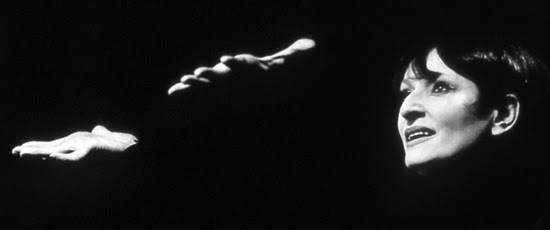
From then on, her stage persona became unmistakable: dressed almost entirely in black, often seated at the piano and illuminated by a single spotlight, her songs felt like intimate confessions.
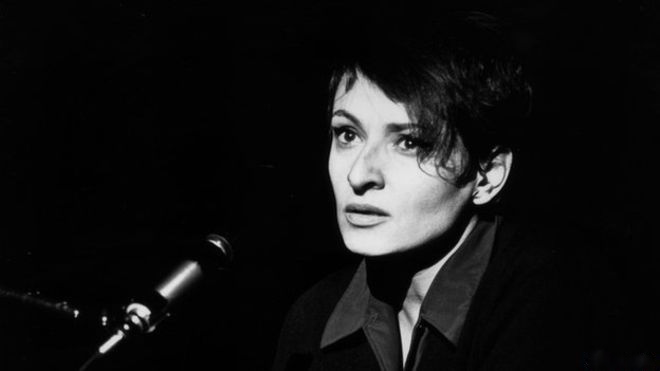
Barbara’s lyrics are poetic but never intellectualised: they speak directly to and from the heart. They are both intensely personal and universally resonant, revealing a deep humanity, capable of outstanding compassion and forgiveness.
In Nantes (1963) she describes travelling to a rainy city where she has been summoned to the bedside of someone dying. She arrives too late. Only in the final line – “Mon père” – does the listener realise that the deceased is her estranged father.
La Solitude (1964) depicts the feeling of loneliness as though it were a human being: “I found her by my door, one night, as I was returning home”. Here, too, the identity of the subject (la solitude) isn’t revealed until the very end of the song.
Perhaps her best-known work, L’aigle noir (1970) tells of a black eagle landing next to her while she’s asleep by a lake. The symbolic references to sexual abuse are apparent.
In Göttingen (1964), written after performing in the German town, she reminds listeners that German children are no different from those in Paris. In the decades following the war, the song came to symbolise reconciliation between former enemies. In 2003, German Chancellor Gerhard Schröder described it as an important gesture in the healing of Franco-German relations.
Perlimpinpin (1973), my favourite of her songs, evokes war as the loathsome enemy of children’s laughter. It was written two years before the end of the Vietnam War.
Barbara often ended her concerts with one of her most beloved songs, Ma plus belle histoire d’amour, c’est vous (1966) – “My greatest love story is you” – a declaration of love and gratitude to her audience, whom she treated not as spectators but as partners in an emotional exchange.
In the late 1980s she became actively involved in the fight against AIDS, giving out free condoms at her concerts and visiting terminally ill patients in hospitals. She released the song Sid’Amour à mort (SIDA being the AIDS acronym in French) at a time when mentioning the disease was taboo.
Declining health eventually forced her to withdraw from the stage, but in 1996 she released a final album that sold more than a million copies within twelve hours – proof that her bond with the public remained powerful.
Barbara died in November 1997. Thousands of admirers attended her funeral.
This article also appeared on the blog of the Institut Français in 2018.

